Saturday, September 4, 2021

In Quest of Conclusions

So this week was a momentous one.  I sent a final edit to my editor.  Well, as you may have noticed final in the publishing world is a lot like many other finals in life. I will come back to the book at the end of this post.

This week our president, finally pulled us out of Afghanistan.  That was a conclusion I believe that most Americans thought was appropriate.   There was an uproar on his lack of consultation with our allies and his “strategies” (I believe both were justified in spite of the need to leave) to withdraw.  The chaos at Kabul airport was horrific.  I think if one is charitable this was not the USs finest hour.   But we are out of this 20 year involvement, or are we?   Babylon Bee joked that the Taliban had opened an Army surplus store with all the military equipment left behind.   For me I am more concerned about the people we left behind.   News reports are that the Taliban has not treated those who helped our effort but could not get out well.  One wag described the evacuation as a Blunder-Bus.

From my perspective the  lessons we should learn from this - which we do not seem to be very good at -a) is to follow one piece of advice my mother gave me - "Just because you can doesn't mean you should" and another which suggests that if you don't have a pretty clear plan when you get into something you are not likely to succeed (if you fail to plan you plan to fail).   In several instances of foreign policy in the decades since WWII - we have violated both rules and paid the price.

It turns out that Sacramento will be a large venue for the Afghani refugees who were able to get out ,many of whom worked in support of the American mission(s),  And in one of those odd turns of technology - we got an appeal from a friend in SMA (a former State Department employee) who worked with an Afghani who worked for the American Embassy (and she had worked with) who will be coming to Sacramento.  Soon after we got that, our Priest in Sacramento convened an interfaith meeting to think about how we could help these people as they are resettled to our area.  IMHO that is the least we owe them.   At the meeting we heard from a couple of remarkable people who have helped to coordinate including one amazing woman who is in charge of collecting and distributing food and other kits to new arrivals.   Her husband commented that their lawn is a bit shaggy because their garage is full.  Two local charities The Rescue Center  and the Sacramento Welcome Center seem to be working hard on accommodating our new arrivals.   At the meeting we had Episcopalians, Latter Day Saints, and Muslims represented.   It was heartening.

But then we are also coming to a conclusion on the Recall effort against Governor Newsome.  The polling at this point seems to be going in favor of retaining Newsome.   As often happens in the last two weeks before an election there is an awful lot of hyperbole being thrown about.  The leading candidate to replace the Governor has had a bunch of wild charges made against him.   But then you look down at the choices that Californians are being offered to replace the Governor and you don't need to wonder why the state has a flaky reputation (even if we did not have a Governor who in the middle of the COVID lockdown chose to have an unmasked dinner at a fancy restaurant in Napa which one of my democrat friends charitably described that action by Newsome as “tone deaf”).   The range of talents is quite limited while the depth of aspirations is mind-boggling.  Well actually the talent is in short supply. Perhaps four or five of them could actually do the job.  As one long time democrat campaign guy said, skills here should not be considered.  If the governor is recalled the sages in the legislature are likely to greet the budget proposal with two words “and those are not likely to be Merry Christmas” - as a native Californian I would wish that we could get a group of us who could get off the Kabuki politics we’ve lived through for the last couple of decades and begin to tackle issues like homelessness, water, improving the schools and things that really matter to Californians.  

The fire season also started early this year and much of the Northern part of the state has enjoyed AQIs (Air Quality Indexes) of well over 200 for several weeks.   Not to make a bad pun but we are not out of the woods yet.   The combination of terrible forest management, idiotic water policy combined with whatever effects their might be from climate change offer real risks through the next couple of months.  The good news, to the extent there is some, is that most of these fires, so far, have not produced significant damages to homes like the 2017-18 fires did.   When we left SMA the AQI there was 28; when we arrived in Sacramento it was 226.  I don’t think anyone can tell you when we will be out of this fire season or more importantly when the “leadership” of the state will be inclined to tackle the real issues that leads us to move to “smoke without mirrors” in each of the last half dozen summers.   Presented at the bottom of this post is a primer on AQI.  

One other odd comment about disasters.  Are you as puzzled as I am about the news coverage on Ida?  The number of deaths as a result of the 2005 storm Katrina was more than 1800 - this year in the south is is fewer than 5.  Sure power went out.  But because of a new system of levee reinforcement since Katrina hurricane alley was relatively safe.  Compare that the the news coverage o deaths in the northeast (46) where the coverage has produced comments like this from the AP "A stunned U.S. East Coast faced a rising death toll, surging rivers and tornado damage Thursday after the remnants of Hurricane Ida walloped the region with record-breaking rain, drowning more than 40 people in their homes and cars." (Yes I did add emphasis)

The AP goes on to comment "In a region that had been warned about potentially deadly flash flooding but hadn’t braced for such a blow from the no-longer-hurricane, the storm killed at least 46 people from Maryland to Connecticut on Wednesday night and Thursday morning." If you ever wondered about the regional biases of the MSM - look no further.


SO what is going on with the book?  As noted at the start of this Ramble (the apt name of my original blog) a final draft went to my editor this week.  But what does a “final draft” actually mean?   First, I have two chapters still out with reviewers.   The comments I have received on all the other chapters have been stunning; very very helpful.  For example, in the chapter I did on Values - a good friend helped me understand that the Bible does not mention luck.   He commented that if God is either omnipresent or omnipotent he does not get surprised - but humans do.   Second, I have spent some time working on photos.  A key part of this project for me has been to include photos.  But there are some quirks in getting photos printed.  As noted in the last post, they need to be of a high enough resolution to be useable.  But I may actually be able to use color photos in the Kindle/iPad version but will probably need to use black and white photos in the paperback.   Getting those organized for my design guy is a bit of a task.   Third, one of my sources offered me two dozen publishers who can get something into a paperback edition.   Over the last two years I have consulted with some of those but there are still half a dozen leads to run down from Kindle Direct to a bunch of smaller presses.   Finally, there are two unresolved issues in the manuscript.   My editor suggested that I include a visual timeline at the end of the chapters on Family.   I do not like what I came up with (visually) and I may just leave that up to my design person.   But there is also one chapter that I am still undecided on whether I will include it - which originally came when this was a Storyworth project. It is a musing on my reading habits.  I’ve already cut several chapters (ones on Critical Race Theory - called Plessy v Diangelo - which I liked and my reviewers also liked; on on how I dealt with COVID; and one on media influences when I was a nipper which was restructured to a speculation on whether I am a person of my times).   My goal is to get comments back from my editor by the end of the month; spend some time in early October doing final final revisions; get the manuscript to the design person so that by about the first of November we will begin to getting the project to final publication.


As I was researching the book I re-read Huckleberry Finn and came across his epithet for his book  “so there ain’t nothing more to write about, and I am rotten glad of it, because if I’d a knowed what a trouble it was to make a book I wouldn’t a tackled it, and ain’t a-going to no more.”  Who knows whether I will follow Huck’s standard.

What is the U.S. Air Quality Index (AQI)?

Think of the AQI as a yardstick that runs from 0 to 500. The higher the AQI value, the greater the level of air pollution and the greater the health concern. For example, an AQI value of 50 or below represents good air quality, while an AQI value over 300 represents hazardous air quality.

For each pollutant an AQI value of 100 generally corresponds to an ambient air concentration that equals the level of the short-term national ambient air quality standard for protection of public health. AQI values at or below 100 are generally thought of as satisfactory. When AQI values are above 100, air quality is unhealthy: at first for certain sensitive groups of people, then for everyone as AQI values get higher.

Daily AQI ColorLevels of ConcernValues of IndexDescription of Air Quality
GreenGood0 to 50Air quality is satisfactory, and air pollution poses little or no risk.
YellowModerate51 to 100Air quality is acceptable. However, there may be a risk for some people, particularly those who are unusually sensitive to air pollution.
OrangeUnhealthy for Sensitive Groups101 to 150Members of sensitive groups may experience health effects. The general public is less likely to be affected.
RedUnhealthy151 to 200Some members of the general public may experience health effects; members of sensitive groups may experience more serious health effects.
PurpleVery Unhealthy201 to 300Health alert: The risk of health effects is increased for everyone.
MaroonHazardous301 and higherHealth warning of emergency conditions: everyone is more likely to be affected.


Sunday, July 25, 2021

Back to the Book

When last I wrote I discussed an increasing tendency to be super cautious.   This post is different.  You see, I've done a couple of things in the last two weeks which I think are progress.   First, I completed the final chapter in the section on philosophy - that is focused on values.  It proved more difficult to write in part because the subject  is not an area where I have spent a ton of time studying the issues.  The ratio of economics and finance books and articles in my library to religious texts is perhaps 879:1.   (That is not because I only have 879 books on finance, economics and tax issues.).  I sent it to three friends more qualified than I to look at the draft.

Second, I got out the conclusions chapter which I finished almost a year ago.  The opening meme (A glass is neither half full or half empty but refillable) is still on point.  But believe it or not since I got that first draft done my thoughts have modified, a bit, in many areas.  Writing a book like this is an iterative process - and thanks to the people who have read chapters also an interactive one.   So I have begun to redraft that last chapter.

Third, then there is Filomen.  One Sunday night two years ago as  Quinlan and I were going out to dinner with some friends  we encountered a burro parked on the street, standing there calmly.  I thought the photo was evocative of many issues raised in the book and thought it could be a perfect cover photo.  I went to the guy who is doing design and he said my photo was a bit thin. (Not enough pixels). So I tried a bunch of techniques but could not get to the density needed.  So I called a bunch of friends in SMA who gave pointers to the Burro Guy in SMA (Armando Rivera).  I found him, talked him into coming up to the original site of the photo. He spends many Sundays with Filomen posing for pictures around the Centro.  He noticed my facemark and remarked "Tu cubraboca es Filomen!" (Your mask is Filomen).   We walked up - I shot several pictures.  They may not be enough. If not I will ask him again to help me so I can shoot one more shot in RAW image. (Which is 25 Megapixels).   When I started this project one friend told me based on his experience of writing a book - that at one or more times you will become obsessed with a detail - either running down a fact or something like this photo.  Ok, so that obsession thing seems to have passed, for now.

Fourth, a book written by two friends came out this week, called Mitka's Secret, which is about Mitka Kalinski. At the beginning of WWII Mitka was orphaned from his parents and then spent all of the war either in concentration camps or as a slave of a Nazi sympathizer.   He then spent a couple of years in post WWII relocation camps and eventually was relocated to the US.   He started in the East, married and then made a life in Sparks, Nevada.  He never learned to read and write.  But he worked hard and became comfortable retaining an indomitable spirit.   The book is hard not to read it in one setting - It is an inspiring story of the indomitable human spirit.  Mitka's Secret has a much different focus than Of Course It's True" but it showed me there is light at the end of tunnel.

Finally, beginning next week I will go through the entire draft one final time before sending it off the my editor and the designer.  With luck, Of Course It's True Except for a Couple of Lies (Por supuesto que es verdad, excepto por un par de mentiras - if there is ever a Spanish version), will be in print by the end of the year.

Monday, June 28, 2021

Belts and Suspenders

For a good part of my career I worked on insurance issues.  That came about because of some odd events, described below.   First, there was a suggestion by one of my doctoral advisors who argued that if we were going to become a part of the club we owed it to send them a copy of any paper which mentioned their work.    I sent one of those papers to Aaron Wildavsky, at Berkeley (an issue not related to insurance).  He responded quickly.   But then for about five years he would send me preliminary manuscripts of books he was working on.  I was so flattered that I would read up on the issue and write him a substantive critique, perhaps 15 pages of notes.  Soon after I had written the response, one of SCs professor's told me that was the way Wildavsky would explore a new area.  He would cobble together a manuscript and then send it out widely.  One of the books he sent me in preparation was the beginnings of his thinking about risk.  He published a series of papers and then a wonderful book called Searching for Safety which described the essential mix we need to have between anticipation and resilience in thinking about risk.

In the late 1980s the independents in California were facing a crisis on D&O coverages (indemnifying the actions of boards of directors) because of some bad decisions by the insurance industry earlier in the decade.  It was what is called a very "hard" market.   I assembled a group of financial types to explore solutions.  We soon found that even with the number of our institutions we could not generate enough premium volume to interest companies.  A national group formed and as it developed I  soon became the founding chair of the new board.

Finally, in the early 2000s I joined the Advisory Board of a reciprocal Casualty (auto and home coverages) Company where I served for more than 15 years.  I had managed our joint program for Worker's Compensation coverages until the legislature created something called open rating which made our cooperative venture no longer viable.   A host of terrible companies swooped in to offer coverage at ridiculous rates and several of our members got burned when after a year they got a seeming bargain they suffered huge premium increases as the fly by nights withdrew from the market.

Insurance is an odd business because it attempts to manage risk based on a small number of principles. People who study risk (actuaries) look at two major variables - frequency (how often something happens) and severity (what is the cost of the loss).  They then try to price the relationship of those variables so that the money they take in with premiums and investment income (before they have to pay out losses) will actually exceed losses and administrative costs (that is called a combined ratio m- a ratio above 1 makes the company profitable).  Auto accidents happen with relative predictability and are relatively minor in cost compared to the sinking of ocean liners which can be very expensive but don't happen often.  Essentially the only other variable in the transaction is how much risk you want to share with the company - those decisions are called deductibles or retentions.  

Even with those limited number of variables, most consumers don't think much about the contract they are entering into.   When American insurance companies began to sell life insurance in Japan in the latter part of the 19th Century, agents were in great risk because many of the clients thought that by purchasing life insurance they would escape death.  An example closer to home comes from son Peter who works for a major casualty insurance company.  He frequently gets calls from indignant policy holders who wonder why their rates have gone up.  When he looks up their records he finds that have multiple accidents.  When he explains that, they ask plaintively "Isn't that is what insurance is for?"  NOPE.

So what does all this have to do with the title of this post.  As we have come out of the COVID pandemic I have increasingly wondered how many of the conventions we accepted during the pandemic will become permanent.   And I am reminded of Franklin's maxim - "Those who would give up essential liberty to purchase a little temporary safety deserve neither liberty nor safety."

As the pandemic developed I discovered several things which bothered me.  First, many public officials (including California's Governor and our former President) put on the emergency windbreaker and began to speak mostly nonsense about how well they had this problem in control.  In reality, there was a reason this was called a novel virus. Those politicians refused to acknowledge that we were in a learning curve.  At the same time, we quickly adopted some precautions which seemed odd at best.  We were in San Miguel a year ago March and we soon found city workers going around the Centro in hazmat suits spraying down the sidewalks with some unknown substance.   Some friends and neighbors began to adopt an almost religious fervor for isolation.  Because of my own situation, having at least a partially compromised immunity system, I consulted all of my physicians.  The best advice I got came from my Mexican doctor - "become a hand washing nazi (Apple now actually includes an APP on their watch which counts how many seconds you wash your hands and yes I have continued to work on that standard); maintain reasonable social distance; wear a mask where you might come in contact with strangers and; finally (and I thought most importantly) avoid social media.  (I wish I had done that even more than I did - I saw too many hyper discussions of spittle distance - a term I had never heard before March of 2020).    As a militant individualist I tried, sometimes successfully, to not react to what I thought were extreme reactions.  Occasionally I could not resist.  At one point I was in a market in SMA and saw some hand wipes, which were in short supply in the city.   There were six packages and I wondered whether it was appropriate to buy one or two packages, when I decided to get only one, a San Miguel swell (It is a distinctive type in SMA - that fits the epithet of a person who thinks they are "all that an a couple of chips") immediately swooped in and grabbed the remaining packages. I asked her (Not at all innocently) "trying to snap these up before the hoarders get them?"  To which she shrieked "This is a health emergency!!!!!!"

But here is where I begin to wonder.  There are at least two realities that will come out of COVID 19- First, it is likely that in the next few years we will  experience additional pandemics, perhaps not as severe as the most recent one.   But as Niall Ferguson explained in his most recent book (Doom, the Politics of Catastrophe) the period between the 1918 Flu (which in many ways was more terrifying) and COVID was had several pandemics of varying proportions including the polio one in the mid-1950s and the 1957 Flu - which was a big deal I had forgotten about.

We need to think creatively about what we did in this very real crisis that was ultimately an overreaction and what we did well. The scientific community was, with some regulatory relaxations, able to create new vaccines (some based on very recent science) very quickly.   That confirms a bias of mine that the US oversight of medicines is expensive and not helpful. So if we modify the FDA protocols we might get cheaper drugs. But  I also look at the current requirements of the CDC (which require a COVID test for passengers re-entering the country, even if they have received a vaccination) and think that does not make sense.

The President of Purdue raised in the very question in his address to graduates in 2021.  Mitch Daniels commented "This last year, many of your elders failed this fundamental test of leadership. They let their understandable human fear of uncertainty overcome their duty to balance all the interests for which they were responsible. They hid behind the advice of experts in one field but ignored the warnings of experts in other realms that they might do harm beyond the good they hoped to accomplish. 

Sometimes they let what might be termed the mad pursuit of zero, in this case zero risk of anyone contracting the virus, block out other competing concerns, like the protection of mental health, the educational needs of small children, or the survival of small businesses. Pursuing one goal to the utter exclusion of all others is not to make a choice but to run from it. It’s not leadership it’s abdication." ( Emphasis added).  Daniel's address won my best commencement address of 2021 award (I always read a dozen or so commencement addresses each year - the entire text can be found at https://www.purdue.edu/newsroom/releases/2021/Q2/purdue-president-daniels-biggest-risk-of-all-is-that-we-stop-taking-risks-at-all.html - it is well worth the time). What we seem to need here is a careful review of what we did without the "Science is settled" hype or the assumption that there is one best way.   I hope we can figure out as a nation to do that intelligent review.  But I am not altogether confident that we can which leads me back to Franklin and the worry that Belts and Suspenders are not useful.


The BOOK - I am down to doing a final edit of the last chapter in the fifth section (Family, Work, thoughts about life, Mexico and Philosophy). That chapter is about religious values that have motivated me.   When that gets done, I will send the full draft to my editor for a review and then to my designer.  Timing seems to be looking at the end of the year to actually get Of Course It's True, except for a couple of lies into print.  I appreciate your patience.


Thursday, June 10, 2021

Reflections on Guns and Internment

 For the past couple of years I have gotten together with my two brothers for a couple of days each summer.  Last summer we went to the scout camp that they went to from Berkeley and we based that trip in Murphys which is a cool town in the Gold Country.

This summer, at the invitation of my oldest brother, we flew to Twin Falls where he lives part of the year and where his medical practice was.  

We went to the Japanese internment camp near Twin Falls.  No doubt about it Minidoka and the other nine camps established during WWII are a blot on our common history.  The two I have visited were in desolate places. Minidoka is not as impressive as Manzanar, which Quinlan and I visited several years ago.  Manzanar, after the Japanese reparations bill was signed, was substantially restored.  In one sense both of these sites should be akin to Pearl Harbor - solemn places.  Both camps need to be preserved to remind us of the excesses that government can engage in - we should approach them with reverence and awareness.   One of the impressive stories out of both camps is how many young men left the camps to join the 442d which was the legendary battalion made up of former internees after FDR authorized them to join the Army.  They fought with valor in Europe - gaining a ton of decorations (4000 Bronze Stars and 4000 Purple Hearts).

The next day we went out to Hagerman to do a day course on handguns at Shaw Shooting.  Shaw Shooting has two locations - the Idaho one is in Hagerman.  My oldest brother is a gun enthusiast, my middle brother is not and I been mostly indifferent to firearms. Even with that indifference I feel very strongly about the efficacy of the Second Amendment.  It is important to remember that the Bill of Rights, including the Second Amendment, they are designed as negative not positive rights.  Most all of the language in those first 10 Amendments were intended to limit government activity, not encourage it.   The language is pretty clear - “A well regulated Militia being necessary to the security of a free State, the right of the people to keep and bear Arms, shall not be infringed.“  When the Amendment was written the context was clear, both the creation of a militia AND the individual right to own firearms was seen as a deterrent to an out of control government.    But beginning in the 20th Century some began to interpret the first clause (A well regulated Militia being necessary to the security of a free State) as defining the second (the right of the people to keep and bear Arms, shall not be infringed) - that argument has never been persuasive to me.   But it also has never meant to me that any civilian can possess any kind of firearm.

I have lots of friends who, if they could, would prohibit private ownership of any firearm.  I strictly disagree.   At one point a professor published an article arguing that firearms were not important in colonial America by claiming to have reviewed colonial probate records. Luckily a researcher asked to verify the “data” and when the first author obfuscated and then refused to offer proof went back to the same records and found the first researcher had made up his data.  The first guy was trying make the case that the Second Amendment is limited to arming militias. It was a great example of politically inspired research, which in this case was exposed.    The most recent decision by the Supreme Court (which involved a horrible law in DC) called the Heller case made a pretty clear statement that the syntax supports individual rights to possess firearms.  

I have one revolver but have never been much of a shooter - although in college a fraternity brother and I would sit on the back porch of our fraternity and hand launch clays out over the Calaveras river.  There always seemed to be a bottle  of Jack Daniels involved.    For someone who is relatively indifferent to firearms, I seem to have been pretty wordy about my thoughts!  But back to the course at Shaw Shooting….

Shaw Shooting is legendary - they train everyone from rookies like me and my middle brother to military and police.  Shooting a pistol with any skill begins with figuring out how to sight the weapon but also how to squeeze the trigger.   Our instructor was absolutely superb.  He spent an hour in the morning explaining hand gun and range safety.   After the safety discussion we went out on the range and practiced with paper targets. I  got the chance to shoot a 40 caliber, a .22 and a Sig Sauer 226 although I liked the 9MM best.    In the last part of the day we went to shoot at metal targets.   By then I was getting tired physically and mentally so my accuracy declined

At the end of the day I was surprised that the process of learning how to shoot a pistol requires both physical and mental capabilities; one might say it is a like golf with bullets.  The picture is of a cluster I achieved with a 9MM at 7 yards.  The target I was shooting at was about 5-6" - with the center white space about an inch.   Our instructor used those smaller circles as his target.  While I was relatively pleased at my clusters - he added a couple of handicaps (shooting the pistol upside down).  Even with those handicaps he could shoot out the little white circles with one clip of 10 shots.   It was a good way to establish just how far an amateur like me was from proficiency.

While I was in Idaho I started a book by a UVA professor named Jonathan Haidt (The Righteous Mind) where he created a typology of six moral scales which animate our feelings and thoughts about politics.  For example he discusses a continuum of care >>> harm and liberty >>>0ppression ; fairness >>>cheating.   Haidt argues that liberals, conservatives and libertarians value the individual variables with different weights. They also consider some of the variables more important than others.  That helps to explain why we have such a hard time talking civilly to each other.    Haidt’s matrices remind me a lot of Thomas Sowell’s  landmark work A Conflict of Visions where he argued that liberals and conservatives may use the same terms but with fundamentally different meanings.

There are many examples where we seem to be stuck in thinking about solutions to problems which most Americans would acknowledge.  The day after our class at Shaw there was another shooting in the US.  Immediately many in the political class came up with utterly predictable and completely useless statements trying to hook their constituencies but not doing anything to think about how to reduce the number of incidences like the one on that day.    Haidt's book gives one a good idea about how we could potentially improve our civil communication.   What concerns me is that with the 24 hour media cycle, social media and politicians who may well gain from keeping us apart - there may be no incentive to creatively think about getting back to civil talk.

UPDATE on the Book - I have one more chapter to edit from my editor’s comments.  I will then spend the rest of this month and July re-reading the manuscript and formatting the pictures in it. The first section of the book has a ton of pictures.   Each needs to be checked for quality and then a placeholder needs to get added to the manuscript.  The designer then places each in their proper place.


Thursday, April 15, 2021

Editores magna

Believe it or not I am making good progress on the book.  This week I got comments back from my editor (more on her below).   For some reason I had an odd idea that an editor was a ghost writer - NOPE - this one is a coach.  In our first conversation last Spring she commented "After all you are the author here."

The original design included three sections - One on my namesake (Jonathan Archer) and then a series of reflections on family.  A second section dealt with several ideas that have been important to me over my lifetime.  (That one exchanged photos for footnotes!).  And then a third section of questions that were generated by either Storyworth (which my daughter gifted me for Christmas a couple of years ago) or things which interested me but were allegedly on the theme of the book.

Early in the year at the suggestion of a friend in the Dominican Republic I hired an editor to take a deep dive into the project.  It turns out she lives in Sacramento.   At the same time I identified a designer who could help put the book into a form which publishers will accept.  He lives in Denver.  Both of those things were focused on improving both the readability of this book and the look and feel.   In the world of somewhat DIY publishing there are a lot of details.

Book publishing  has changed a lot in the last decade.  A year ago I got a feeler from an unnamed company (who had two Ss in their name) who said they would read my manuscript for a fee of about $2000 and if they thought it publish worthy they would send me back part of the fee and agree to publish the book. If they did not like it they would keep most of my fee.   I thought that was a silly deal, but it did show me some of the things which companies we call publishers now have to think about.   There are tons of new titles every year and as Tracy Kidder said in his 1995 Book Good Prose - which is a series of reflections on writing good non-fiction - the number of books each year exceeds the populations Pomona and Escondido (Combined!) so the expectations of both authors and publishers have changed.  Some of the most entertaining books I've read in the last few years were DIY efforts.  But as Kidder suggested content and design are still critical.  Hence some outside and professional assistance was merited.

This week I got 10 pages of evaluation from my editor. She recommended reorganizing the book into five sections from the three- Family and Childhood; Education and Work Life; There's More to Life than Work; Mexico; and Ideas and Values 2020 and Beyond.  It was what one of my professors used to call an "Aha" experience.   It allowed me to focus some underlying thoughts I had on my own.  In addition to the structural comments she made a series of suggestions which will materially improve the flow of the text.

So what are the next steps?   Well, first of all, I am going to work through the comments.   Second, I will begin the process of reorganizing and rewriting.   We agreed to have her a copy of the manuscript by September which would then get the book into final form in late Q3 or Q4.

When our daughter Emily first suggested this project, she argued it was a good way to keep me off the streets.   It now looks like her original plan will continue a bit longer.  Thomas Sowell quoted Benjamin Disraeli who suggested that many of us create a genre of writing called "anecdotage" when we are later in life.  That was a good term for a memoir.

Two other footnotes.   One of the questions I was trying to answer in writing this book was why the ancestor I was named after chose to undertake the arduous trip around the horn in 1849 to seek his fortune while his younger brother chose to stay in New York.   The younger brother, Oliver Hazard Perry Archer, became very successful and according to family lore was a buddy of Jay Gould.  Research dispelled that story.  It turns out that OHPA was part of the group that ousted Gould from the Erie in the mid-1870s.   Although Jonathan lived only a year in California, succumbing to either Cholera or a burst appendix, he seems to have come with the same entrepreneurial spirit that his younger brother had in New York.  But as Paul Harvey used to say, if you want the rest of the story, you will need to tune in later in the year.


Wednesday, March 3, 2021

 LLOYDS of LIFE 


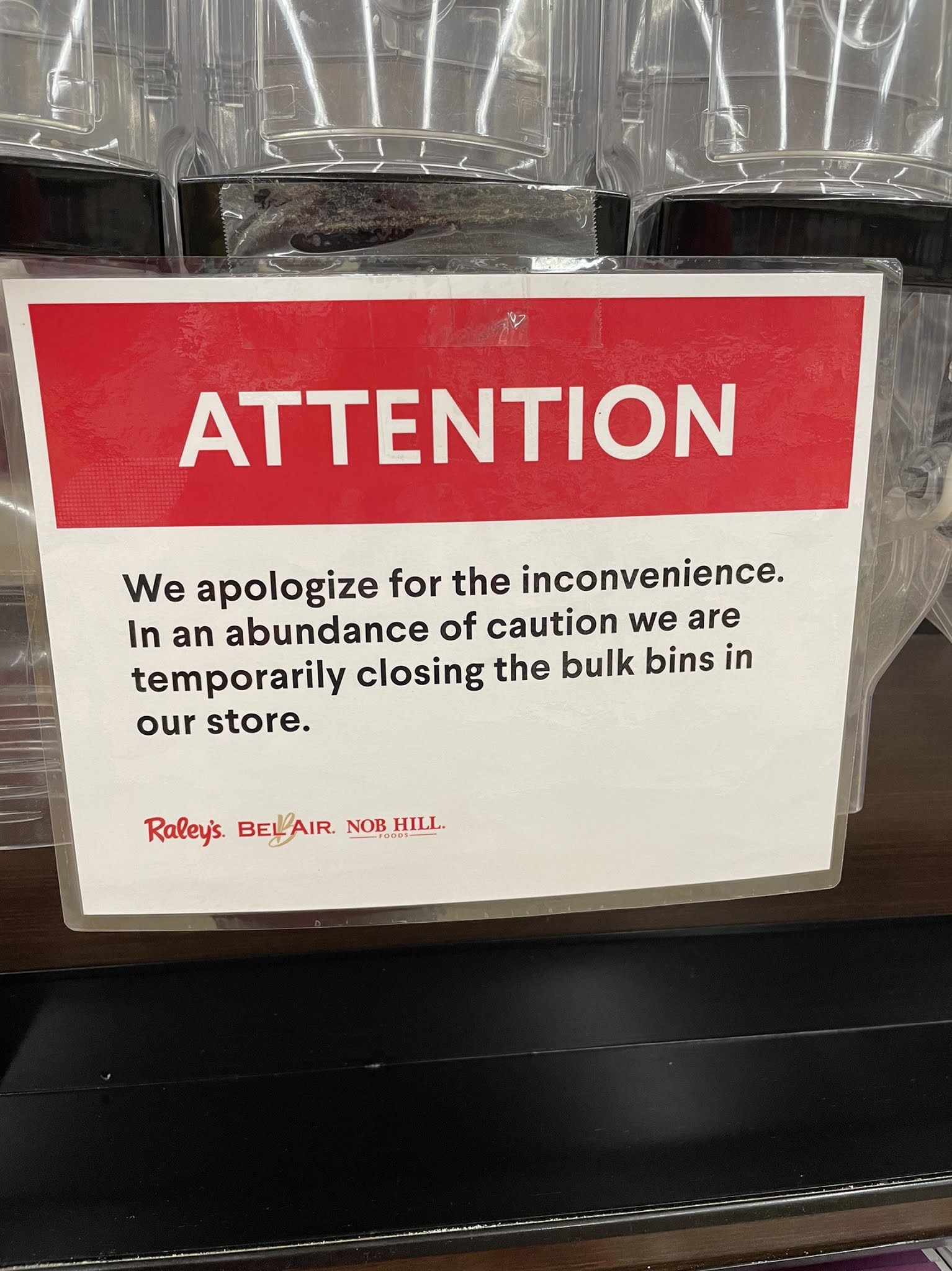
One of my favorite Yogi Berra quotes is ““It's tough to make predictions, especially about the future.” But for the last 40 years I have worked a lot to understand just how tough that is.  This week in our local market a sign set me off and got me to think about how we as a society handle risk.  You don't usually get inspired in your local market - but then these are inspired times.


What is the hell is an “over abundance of caution?”  And more importantly is that a good thing?  COVID has taught us to be careful.   But what are the appropriate limits of caution?  From my perspective many of the policies we so easily accepted to “keep us safe” were nuts.  Later in this post I will offer some examples - but first let me explain how I got interested in understanding risk.


Near the completion of my doctoral work I began a strange tangent into insurance.   That came about as a result of several things.   First, the insurance markets, especially for liability coverage and more specifically for Directors and Officers policies, began to constrict.   Fashion played a part in that debacle because a group young financial analysts in several companies speculated that the high interest rates in the late 1970s and early 1980s would last forever.  So they convinced their bosses to ignore normal standards of underwriting and to simply pursue a strategy that any unprofitable business could be made up by returns on the bond portfolio.   That was foolish. When the inevitable losses appeared several of the companies that followed that advice began to restrict coverages and raise rates to compensate for all those losses that happened after interest rates went into more normal territory.


By the time the folly of cash flow underwriting had become a crisis many of the colleges and universities in the Association were having problems in finding reasonably priced insurance.  I brought together a group in the Association and we spoke with four or five major insurance experts to see if we could form a risk pool. The Association I worked for had done a remarkable job in pooling risk for workers compensation coverage; in that case a pool limited to California worked; in liability coverage it did not.  I became involved in a group of institutions nationwide and we soon formed a company called United Educators RRG, which to this day is recognized as a leader in providing a range of coverages for non-profits.  I became the founding chair of the board.


A few years later I was asked to join the board of a reciprocal company (which is like a mutual insurance company) that offered casualty insurance for educators, nurses and cops.   I served on that board for fifteen years.   In 2018 and 2019 that company faced some huge losses as a result of the California fires.


A second precipitating event for my interest in insurance was created after following some advice from one of my professors at USC. He urged doctoral students to send copies of their papers (at least the good ones) to living scholars that they wrote about.   I wrote the two founders of the field of Public Choice Economics after I had written a paper about one line of their theories.  And damned if they didn’t write back and we kept up a sporadic correspondence for a couple of years.   They were both very generous with their time.  Lo and behold about two years after I finished my dissertation one of those two was awarded the equivalent of the Nobel in Economics. (Technically the Sveriges Riksbank Prize in Economic Sciences).  


I also sent paper to UC Professor Aaron Wildavsky.   I had read one of his books as an undergraduate (The Politics of the Budgetary Process) and had come across an article on an issue that I was thinking about and wrote him some of my thoughts.   Wildavsky sent me back some handwritten comments but then within about a year he began sending me manuscripts of book drafts (he was a prolific author).   The first was on tax and expenditure theory (a book with audacious title of A History of Taxation and Expenditure in the Western World).  A couple of years after my dissertation a manuscript arrived, which I continue to treasure, called Searching for Safety in the same early form.  In both cases I was so flattered by the attention of such an academic notable that I actually spent a fair amount of time researching and commenting on the manuscript.  One of my SC professors told me that was how Aaron wrote.   He would throw together a manuscript in an area - send it out widely, then cull all those comments do a bit more research and write the definitive book in the field.   Searching for Safety evolved into a second book on risk theory.  This time he coauthored with a colleague named Mary Douglas in which they explored the cultural theory of risk.   Both books argued that our approaches to risk were in part cultural and political.


Insurance is a strange topic. In its simplest form we are trying to predict the future.   Its founding is often credited to Lloyds of London which was created in the 17th century in a coffee house in London. The members of the syndicate would be given the chance to underwrite potential losses from maritime activities.  So if ship were bound to India, the owners might go to Lloyds and see if they could get a group from the syndicate to, for a fee based on risk, indemnify the losses if the ship were lost at sea.   Each of the members of the syndicate would bid on the cost of providing coverage and often the market functioned from a series of bids from individual members who ultimately agreed to take down all or part of the risk.   In a very pure sense that is how much of insurance still functions, especially the reinsurance market - where companies seek to hedge their risks for extraordinary losses.   


Two concepts are important here frequency and severity.   Betting on the future requires two judgments.  First, how often do losses happen?  Some insurance is relatively predictable - for example car accidents.  Based on lots of data, it is relatively simple to predict how often someone will have an accident.   Second, how much will it cost to cover the loss?  So for example, car accidents, as things go, are mostly inexpensive to fix.   But some big events don’t happen very often.  So if you are trying to indemnify losses for something like a flood the costs when the losses are paid out episodically but when the losses occur they can be huge.   For the years that I owned stock in Berkshire Hathaway Warren Buffett’s annual reports gave a superb tutorial in the economics of insurance (BH owns Geico as well as a series of companies that offer reinsurance and high cap coverages).


In San Miguel last Spring the municipal government deployed a series of measures, including one which made me giggle.  One morning while I was out (properly masked and socially distanced) I encountered a city employee with a hazmat suit on.   He had a reservoir on his back attached to a hand pump sprayer and he and his colleagues, which looked to me like a group of Pillsbury Doughboys, would go out a couple of days a week and spray down the cement with some mysterious fluid. Was that an example of an overabundance of caution?  


In the US, from my view, we have allowed the teacher’s unions to get away with keeping the schools closed too long.   Our governor in a sign of “health theater” has commented several times that he sympathizes with all the parents who are concerned that their kids are losing educational time.  Needless to say he has not mentioned that his darlings attend a private school which has remained open.   Kids sporting events have been cancelled, in my mind, without rationale or reason.  I can see limitations on some contact sports and on some crowd events but it made no sense to cancel events like kids soccer.   Our son has been a leader in the “let them play” movement - which seems finally to be making progress in reopening things, under reasonable standards.   In both schools and sports - the chances for “super-spreader” events are remote.  (Who invented the term “super-spreader” is still a mystery to me.)


But it seems to me that Wildavsky and Douglas were right about cultural and political approaches to risk.   In the 2012 Democratic convention there was a short video, called “the story of Julia” about a woman who got cradle to grave services from the government.   The vision of what government could do successfully and more importantly what government should do was robust.   As I watched that message, I kept wondering whether it made a good argument for shielding Julia and her counterparts from the visisitudes of life.   Obviously there is a balance here.  Even such conservative icons of conservatism like Frederick Hayek and Adam Smith recognized an appropriate role for government in providing a “safety net.”  But the question of whether there are inappropriate trade offs from making all those decisions for society is never addressed by the left.


There is in my mind a second set of issues here.  Once something is authorized for government to assume more risk there are always what economists call “moral hazards.”   The formal definition of that term suggests that when risk is protected by some form of insurance that people are less likely to be vigilant in assessing their own risks.   The classic example in the literature is seat belt usage.  Many writers suggest that mandatory laws may encourage drivers to be a bit more risky in their driving habits.   But would anyone really like to go back to the era when seatbelts were not used?


A good example of the absurdity of nanny statism is contained in Proposition 65 warnings.   We recently switched internet providers and as a consequence had a new router installed.  The provider, as required by Proposition 65, informed us that the router, I assume if we decided to consume it, had the potential for causing cancer.   Just how does that help protect me from getting cancer?


About a decade ago Cass Sunstien and Richard Thaler produced a book in 2008 called Nudge. The novel argument suggested what some reviewers called “Nanny State Paternalism.”   It proposed that by setting decision structures in the right way you can get individuals to make the “right” set of decisions.   An example might be by simply resetting a default choice.  So for example, in retirement programs a company might reset a decision so that employees need to opt out of investing in their retirement program rather than making an affirmative choice to pay into the program.  I can see the rationale for making that change.  But I simply disagree with it.  An even more pernicious example is called age based investing which some financial advisors sear by.  In its simplest form as you age your portfolio commitment to stocks diminishes as you age (for example at 25 your commitment to stocks should be 75%/ at age 50 it should drop to 50%).   Look at any long term investing strategy and the age based approach is a good example of an over abundance of caution.  I am all for educating employees about the benefits of saving for retirement and for providing information about the consequences of various options; but I think even this small choice has larger effects on society.   That is the crux of my quibble with the sign.


What the writers of the sign don’t seem to realize is that the over abundance of caution can produce the same kinds of distortions as reckless behavior.  But then you wouldn’t be surprised that a baseline for most of my philosophy is to encourage individuals to take responsibility for their actions.


The state of the book - Of Course It’s True, Except for a Couple of Lies, is with an editor.  And I am fast learning about the dizzying range of options in the DIY world.  Here are some of the issues I am trying to think about.   First, I want an Ebook format as well as a soft bound.   It will be published on Apple Books and one other site for the ebook.  I am looking at options.   Second, a good part of my research for this book is a series of photos, especially in the first section of the book.   Two examples are a photo of the original passage receipt for my namesake to come to California and a photo of my great grandfather in front of his telegraph office.  But putting images in a book creates some other issues.   I’ve thought of creating a website which would be referenced in the manuscript and logged by chapter.  A niece did that for her book on computer security and it allowed her to add updates.  If I chose to do that it would require some rewrites.


Sunday, January 10, 2021

A CONSERVATIVE RESPONSE TO THE EVENTS OF THE LAST WEEK

I should say at the outset I did not vote for Trump either time.   In 2016, on a prior blog I wondered whether the nation was ready for someone who had been a former star on World Wide Wrestling.  In spite of that pretty clear position I have had to endure my virtue signaling friends from the left every time defended those things in the Trump Administration which I thought were positive.  And in spite of those scolds, there were several at least six-  
    • Economic Growth PRE COVID - As a result of the tax bill in 2017 and conscientious efforts to dethatch our regulatory environment, which had grown quite thick over the last several administrations we had real economic growth for a couple of years.   That was after several prominent economists claimed GDP growth was over. The numbers were impressive and NO they were not a continuation of the very slow growth (the slowest recovery in the nation’s history) coming out of 2009.   One of the most important parts of that growth was that for the first time in several decades those at the lowest income ranges experienced real growth in wages.  That improved the GINI coefficient materially.
    • The Tax Bill - while I don’t think 2017 was as good as 1986, it did some important things.  It reduced corporate taxes to a level more closely approaching taxes in other developed countries.  That helped to repatriate some capital back to US shores.  It simplified taxes so that only a tiny portion of the taxpaying public need fill out the long form.  For me, one of the things which annoyed many governors was the reduction of the state and local tax deduction which offered HUGE subsidies to the VERY WEALTHY in HIGH TAX STATES. (Emphasis added!).  Ideally this should be eliminated entirely to improve tax equity.  But at least that was a start.
    • The revocation of net neutrality (a last minute attempt by the Obama administration to redefine the Internet as a public utility and apply 19th Century regulatory rules) helped lower costs for all of us and actually improve speeds right at the time that we were learning ZOOM skills.
    • His mideast policies materially improved the prospects for reduced tensions in the Middle East - with the recognition by several Arab nations that conceded Israel’s right to exist.  I believe, although I understand that many on the left disagree, that moving the US Embassy to Jerusalem was a positive step.
    • Getting COVID Vaccine in Place - In spite of the nattering of his critics he was able to mobilize a real effort to get a vaccine for COVID into production in record time.  His critics claimed it would not be done and they were wrong.
    • JUDICIAL APPOINTMENTS He made a series of very good judicial appointments including three members of SCOTUS and a bunch throughout the judiciary.  

That is not to ignore the numerous negative parts of his administration.   On Thursday I had a conversation with my Spanish tutor and she commented that the President was like a singer - (in Spanish it is not as funny as in English) because he was always singing “Me,me, me, me, me.”   Trump showed himself remarkably unable to rise above the personal and the petty.  Whether his critics were also unable to do that is not relevant.  We should expect that our president can operate at a higher level than even his antagonists.   Politics has been debased, not just because of Trump - but it certainly was not uplifted by his example.


We had a couple of politicians who rose to the occasion this week.  Mitch McConnell's speech on the floor of the Senate on Wednesday was one example.  So was the Vice President's letter explaining why he would not countenance ignoring the limited role of accepting the electoral college ballots from the states.


Beginning on Saturday and continuing to Wednesday things went downhill.   In two very stupid moves, Trump destroyed his legacy.   Let me address each separately.   On Saturday he hectored the Georgia Secretary of State in a phone call which only an idiot would assume would not be made public.  Trump won in part in 2016 because his opponent made comments about “deplorables” in what she thought was a private meeting.  Why would he not understand that his call would immediately become viral?   As Important is the notion that election results can be changed by fiat.   For me, the elections I cared about, including three ballot initiatives in California; reducing the democratic majority in the House which included the election of some very good and thoughtful conservatives including several women to counter the “squad”; and the election of a county supervisor in our home district played out well.


I believe there were irregularities in the 2020 election.  We rushed into electronic and vote by mail without serious consideration of how to do it well.  That being said, I do not believe that the sum total of those irregularities resulted in a defective result.  Biden won.  If there were ever any energy to think more carefully about improvements to election procedures, Trump’s phone call and his actions on Wednesday doomed any serious discussion about those issues.   Quinlan and I voted from Mexico using a federal procedure which requires verification processes but then is pretty simple.  Insuring the integrity of the electoral process is critical to confidence in government and Trump’s actions assures that the country won’t spend much time before the next election trying to improve the process. 


The call on Saturday materially affected the results on Tuesday in Georgia.   Mind you that I did not have high regard for either GOP candidate, but I do admire the legislative skills of McConnell over those of Schumer.   Ossoff is a near perfect exemplar of George Bernard Shaw’s quote on political figures ““He knows nothing; and he thinks he knows everything. That points clearly to a political career.”   And while Perdue was not significantly better he would have contributed to a restraining force on excesses that are now going to be less restrained.


Perdue and Loeffler did themselves no favor by pandering to Trump by expressing support for the $2000 stimulus boondoggle and by pledging to take the extraordinary step of voting to make the certification process more than it is intended in the Constitution.


But then came Wednesday.   I believe very deeply in the First Amendment and in the provisions for the Right of Assembly and although I don’t accept the premise of a rigged election, I would have fully supported the right of my fellow citizens to Assemble to express their views.  What I don’t agree with is the right to anarchy.  


In the same vein I reject the nonsense perpetrated by the left to defend the anarchy in cities like Seattle and Portland and the wanton destruction of property and the pathetic notions of “defunding the police”.   If there is reason to look at police powers and to modify them to current conditions, then do it in an orderly manner.   Contrary to the bizarre statements of the Mayor of Seattle, the takeover of a major portion of the city, was not part of a “summer of love.”


The President’s remarks were close to incendiary.   Those by Rudy Guiliani went significantly more over the line.   The call to combat should be prosecuted.  


So how to we get to reconciliation as the President elect has promised.   For me there are a couple of quick steps that Biden could take which would point us in the right direction.   First, the President Elect should announce that he will drop his Twitter account.  The NYT on Sunday morning had an article detailing how much Trump relied on Twitter - during the last four years he tweeted more than 11,000 times a day. In recent weeks he has tweeted more than 200 times a week.   That is absurd.  It is not as if the president does not have access to news outlets, even if the claim that Trump faced a barrage of hostile lefty journalist (which I think for the most part is true).  But don’t we hire a President to do more important things?


The last job I had in DC was working for Bill Simon.  One Saturday afternoon, we scheduled a press conference to announce something we were doing to respond to the Arab Oil embargo.    I had the duty to write Simon’s opening statement, and as a joke I did a single sheet which said, “We actually don’t have anything to announce but we just wanted to see if you would show up!”  Luckily Simon thought that was funny and I also wrote a real announcement about our news.  But the WSJ reporter on our beat showed up in Tennis Whites.  There is nothing to suggest that things have changed; a president commands attention.  I grew quite tired of the self righteous “journalists” in the White House press room who believed that their role was to make the news.   But even with those challenges the President has what TR called the “bully pulpit” to shape the news cycle and it should not be in 240 character tweets.


A corollary to the first suggestion is that we need to take down the mini-Rasputin who parades as a CEO of Twitter.  He and the head of Facebook are entirely too full of themselves as protectors of our system instead of grubby jerks trying to make a. Bucks without regard for the long term consequences.  If you have not seen the excellent NETFLIX documentary called the Social Dilemma, you should.  The best way to negate their profound attempts to control our lives is to simply use them left.  A good friend on the left, about a month before the election said she was considering dropping out of Facebook.  That sounds like a good idea to me, although I have not yet followed her lead.  Did you ever wonder why the root word for Rasputin’s “service” is twit?


Second, many politicians could benefit from re-learning the “pottery barn maxim” of politics - if you break it you bought it.  Trump and many Governors around the country should have relearned this in the year of COVID.   There are times when an elected official can bring stability to an uncertain situation.   And there are also times when respected experts need to be brought back down to earth because they try to express opinions as expertise.  But the stream of consciousness briefings that Trump and his fellow executives offered was oftentimes laughable.   Especially, when their actions and their pronouncements did not mesh.   Too many politicians thought “do as I say not as I do is acceptable.”  It is not.  From my perspective the ham handed interventions by elected officials actually allowed experts to quash discussion of alternatives to the prevailing orthodoxy.


Finally,  I am not sure how it should be accomplished but Mr. Trump should not be allowed to complete his term.   From my perspective, the best alternative is to have the Vice President invoke the 25th Amendment.   A rehash of the absurd impeachment process that we experienced from sanctimonious politicians like Adam Schiff and Gerald Nadler would not help toward reconciliation and would reinforce the concerns that a good portion of our population holds against the earlier process.  But the country needs to respond vigorously to the incitement to anarchy and it needs to happen before inauguration day. 


UPDATE ON THE BOOK 


I have retained an editor to work through the manuscript.  As a looked at the current version it is a bit too long.  So I spent the two weeks at the end of the year doing some more revisions.   A couple of friends have read chapters and made some good suggestions.   There are two questions that I have been thinking about.  First, adding photos to the book adds complexity.   I have thought of putting up a set of webpages that would be referenced in the Print and E-Book format which would point the reader to the photos by chapter.   


Those changes will delay getting Of Course It's True Except for a Couple of Lies into print until later in 2021.  But from my perspective it will be a much better book because of the changes.