Tuesday, March 7, 2023


Godot has arrived....In late September I did the last post for this blog.  You may have thought I had abandoned the book.   Not so.  A friend who worked in publishing suggested to me that once the manuscript is accepted there is a lag time if you are using a large publishing house.  The warning was correct.   I've spent the last few months using my skills and my patience in working through the path that my publisher (Archway - an imprint of Simon and Schuster) has established.

But this morning my concierge sent me what in the legislative business were called mark up copies. So it looks like we are near the end of getting this in print.   I will need to take some time to mark up the copy and submit my edits.   I think I am going to print the manuscript out because in this case I think I can work with it more efficiently than on a screen.   After those edits are completed I will send them in, Archway will then do their "magic" and Of Course It's True, Except for a Couple of Lies will be in print on all major platforms. (Amazon, Apple Books, Barnes and Noble, etc.).  It will come in three flavors Hardbound, Soft Cover and Ebook.  But here are five things I can tell you now.

#1 Pricing of the Hardcover is beyond my control - the publisher sets the price based on page count and a couple of other factors.  Assuming that the book comes out close to the size it is now (375 pages) - the price will be $39.95.

#2 - The Soft Cover Edition - the softcover version will be $22.95.

#3 - The Ebook Edition - This is where I get to set the price.   The default price is $3.99 but it can go from $2.99 to $9.99.  I am inclined to set the price in the $5.99 range.  

#4 - Spanish Language Edition - In December I gave a speech in Mexico City at a conference on Integral Formation in the Digital World - I was able to reconnect with a college from a University where I taught and he expressed interest in me going there some time in the fall and presenting the book to a convocation.  My Spanish tutor has volunteered to translate the manuscript.    That will be published under another imprint (not sure which one) but because of my work in Mexico "Of Course It's True Except for a Couple of Lies will become Por Supuesto es Verdad, Excepto por un par de Mentiras."  I think that will be primarily released as an Ebook or Soft Cover.

#5 - Release Date and publicity - Based on my schedule and some other factors I think the book will be available on all platforms by sometime in June.  I have spoken with a couple of knowledgable people about how to increase visibility of the book which will include some unique things like the convocations at Universities where I have taught or worked.  I have also thought about some very specific events with groups where I have been involved which would offer the proceeds from all sales to that group.

The Sequel - I am mulling doing a sequel to the book which would be a historical novel, tentatively called "In Pursuit of Happiness" which would be a story about one of the inspirations of the book (my namesake Jonathan Archer - who came to California in 1849 but died soon after arriving) and his younger brother Oliver Hazard Perry Archer who stayed in New York and became a very successful entrepreneur who among other things was a part of the group which dumped Jay Gould from the Erie Railroad board in 1872.   As I was researching this book I found a lot of evidence that Jonathan and OHP were good buddies and wondered what might have happened had Jonathan lived and thrived in California.  It would be based on that set of assumptions and would be considerably shorter that OCITEFACOL.   I am convinced that despite family lore about Jonathan's motives for coming to Sacramento during the Gold Rush - his real motive was Brannonesque (Sam Brannon was a merchant who quipped the way to make money in the gold was was not to pan for gold but to sell supplies to the miners.

Thanks for your patience on this project and for (those of you who still are!) your continued interest.


Tuesday, September 20, 2022

 The Tragedy of the Commons, revisited


When I was in graduate school Garrett Hardin’s article called  the “Tragedy of the Commons” was required reading.  Although   the idea came originally from an article by a British     scholar   named William Forster Lloyd in 1833; Hardin     reintroduced the   idea to a modern audience.   Hardin, who   was  at the University   of Washington, had originally proposed   his revision as the   “Tragedy of the Unmanaged Commons”. He   clearly was a fan of   the rule of experts.  The article can be  reduced to a single   phrase  “if you allow a common resource to   be unmanaged it  will degrade.”    

Lloyd’s article argued - "If a person puts more cattle into his own field, the amount of the subsistence which they consume is all deducted from that which was at the command, of his original stock; and if, before, there was no more than a sufficiency of pasture, he reaps no benefit from the additional cattle, what is gained in one way being lost in another. But if he puts more cattle on a common, the food which they consume forms a deduction which is shared between all the cattle, as well that of others as his own, in proportion to their number, and only a small part of it is taken from his own cattle. In an inclosed pasture, there is a point of saturation, if I may so call it, (by which, I mean a barrier depending on considerations of interest,) beyond which no prudent man will add to his stock. In a common, also, there is in like manner a point of saturation. But the position of the point in the two cases is obviously different. Were a number of adjoining pastures, already fully stocked, to be at once thrown open, and converted into one vast common, the position of the point of saturation would immediately be changed”.[. 


Hardin was more concise - “Therein is the tragedy. Each man is locked into a system that compels him to increase his herd without limit – in a world that is limited. Ruin is the destination toward which all men rush, each pursuing his own best interest in a society that believes in the freedom of the commons.” Both authors are making a comment about an economic concept called diminishing marginal utility - if you overuse something it becomes less useful.  But there is a second unspoken assumption here - that is people are unable or unwilling to think about the common good.   Hardin was a devotee of apocalyptic environmentalism.   He was a modern Malthusian and like the founder of the movement believed that overpopulation was caused in part by welfare policies.  His ideas ignored the effects of pricing and of regulation.  Both authors also ignored the human tendency for humans to adapt.  Hardin was not an economist but boy was his outlook dour. 


For me another contributor to this discussion was Elinor Ostrom, a University of Indiana economist, who thought a little more carefully about the issues on the commons and came to a very different conclusion - She  argued that there are plenty of ways to adjust behaviors without top down regulation.  She made that argument in a book called Governing the Commons, where she took Hardin’s paper and blew it out of the water with examples of alternative, less intrusive, regimes to reduce the problems of misallocation of resources.  For that, she won the equivalent of the Nobel Prize in Economics (the Sveriges Riksbank Prize in Economic Sciences) in 2009.   


There is a good footnote on Ostrom who had to struggle to achieve her status.  When she applied to UCLAs Economics program they rejected her because she lacked Trig.   She eventually got on track, completed a doctorate  and ultimately married one of her doctoral professors. She and husband Vincent had a marvelous career challenging traditional notions of organization and centralization.  Both in her writing and in a couple of chances where I had the opportunity to hear her speak she had a special skill of consistently challenging established interpretations.


As I have thought about the Commons issues I think there is a reciprocal (basically the inverse of the original argument).   Hardin had no understanding of the possibility of spontaneous organization - as an “environmentalist” one would expect he had seen many examples of those things happening in nature - but he seems to have missed them all.  But if you step out of the apocalyptic bubble you realize that there is a strong case to be made for some inverse logic on Hardin’s argument.  Too much regulation can be even worse that too little.


My home state is ground zero for Apocalypticists.  California currently spends a quarter of a billion dollars in licensing more than 200 professions; many of those licenses are designed to protect us from imagined ill effects that are supposedly eliminated with state regulation.  The Mercatus Center at George Mason University recently ranked California 49th in terms of economic freedom and 50th in regulatory freedom, finding that “California not only taxes and regulates its economy more than most other states, but also aggressively interferes in the personal lives of its citizens.”  In addition to its vigilance on all sorts of professions California has lived with the Environmental Quality Act (CEQA) which simultaneously slows down the process of development and adds costs to almost every land decision.  Any wonder why the state’s housing is so expensive?   Is it a surprise that the state is a center for homelessness?   


Then there  is Prop 65, the annoying proposition authored by Tom Hayden, that requires disclosures about supposed cancer risks on a wide variety of real and imagined dangers.  There are some real perils with dangerous substances but the standards in Prop 65 are absurd.  For example, Disneyland has a Prop 65 warning which intones that they use substances that are cancer causing - one of those warnings is near a place to buy coffee.   The problem with the Prop 65 warnings is that this additional annoying disclosure may indeed reduce concern for really toxic substances.  If we know that some of those disclosures are downright silly, how likely are we to have trust in the real risks?  Was Hardin a new example of the boy who cried wolf?   Certainly Tom Hayden made a career on wolf calls.


Opponents of the Apocalyticists are often characterized as “deniers”.   If we want to be fair we should probably shoot back that the Apocalyticists are overly pessimistic about the human propensity to adapt.  Does that mean that I do not accept any form of regulation? That is an absurd question - but it suggests that my thinking says we should be equally skeptical of the efficacy of regulation as some are about the human ability to manage their own affairs.


THE BOOK.   I have had a couple of friends who have wondered whether Of Course It’s True, Except for a Couple of Lies, is part of the continuing Lucy and the football story.   For the past couple of years I have argued that it is about to get published.   Well, in the last few weeks, things have started, finally, to change.  First, I got solicited b one of the imprints of Simon and Schuster to have them publish the book.  I spent a couple of months talking to them but did not like the original proposal they offered me.   Then about 2 weeks ago, because of a note on Linked In, I got an inquiry from Forbes.   They have a division for first authors.  Early in the week, I had a discussion with their rep.   The Forbes imprint is not something that fit my needs, they seem to expect that first time authors need a ghost writer.  So I restarted the discussion with the S&S people and early in this week signed an agreement for them to publish the book.   That imprint makes has distribution through all the normal channels - Apple Books, Amazon, Barnes and Noble, Kobo, and a host of others in hard copy, paperback and E-Books.  The good news is that I think I can see the end of this line.  The bad news is that the process will take about 25 weeks from the time that the final manuscript is submitted.


Thursday, August 25, 2022

 Where is "ceteris paribus" NOW that we need it?

Every discipline has a couple of key phrases, those secret passwords that practitioners invoke..  In economics there is "ceteris paribus".  It is a way to analyze a situation by looking at one variable and holding all other variables constant.  It is a great way to simplify a complex question.   But increasingly, those kinds of common courtesies are ignored.   Two (related) cases in point come to mind.   

The Attorney General approved a search warrant to obtain classified documents from the estate of our former president.   Whether or not that was an efficacious strategy to reduce the chance that Trump would protect classified documents appropriately, or even whether the former president should have such documents, is not at issue.   I personally thought the raid was a bit overly dramatic.   There is a law which stipulates the treatment of presidential records  (although interestingly it does not seem to have any sanctions for bad behavior) but after the raid Trump released personal information about the agents who executed the warrant.   I think that was bad behavior but there does not seem to be a specific federal statute which prevents someone from publicizing the names. In my mind that really does not matter.  As my dad used to say "just because you can, doesn't mean you should."   

The parallel story comes from a group called Ruth Sent Me, who thought it was their duty,when they did not agree with the recent decision on abortion (Dobbs v Jackson Women's Health) it was their duty to publicize the home addresses of several Supreme Court justices.   In this case, there is a federal statute that prohibits disclosure of the Justice's address and also in picketing in front of their residences.   But the Ruth Sent Me people thought it was ok because they really disagreed with the decision.    

In both cases, Trump's and Ruth Sent Me's, the actions were inappropriate, whether or not there is a specific law against such behavior.   But neither cared about holding other variables constant.   In both cases because they held strong beliefs about the search warrant and the draft decision, they could move everything all in.   Basic standards of decency in society will not work very well with that kind of idiocy.

We clearly live in times when reasonable social restraints are ignored by a significant fraction of society.  Andrew Mir, writing in the Summer Issue of City Journal, argues that as newspapers moved from an advertising model (where adds supported Journalism) to a subscriber model - the propensity to pander to the subscriber's whims increased significantly.   That may be part of the problem we face in the quest to have reasoned discussions - we have created echo chambers.

I had so many conversations over the last couple of weeks with friends who are genuinely grumpy about how strident their friends on the left or right are.   I have the great good fortune to have friends who believe Trump is the devil incarnate and others who believe that Trump had the election stolen from him.  I don't believe either meme; but those polarizations diminish our ability to try to figure out what is happening in a particular area.  And ultimately what is the right thing to do for the largest fraction of our fellow citizens.

UPDATE ON OCITEFACL   This week confirmed two new things.  First, my design editor has come up with a dandy cover for the book.   Victoria Vinton (www.coyotepressgraphics.com) sent me what I think is called a pre-print of the book.   That means all the text has been converted into a file which can be sent to my publisher.   My job this week was to go through the manuscript for the 1100th time and look for things which did not look right.  Yesterday I sent her back the PDF so she could make the edits.   At the same time she sent me proposals for the "wrap" the front cover and the side backing.   Victoria proposed using a brown highlight for the author's name.   Our daughter suggested that when people are asking for the book in a bookstore they could simply ask for the brown one.

Second, I found out yesterday that KDP (Kindle Direct Printing) rejects manuscripts with lots of photos.  From the start I have thought - even though the pictures in this book will be in black and white for the print edition  -  the images were an essential part of the project.   Does that mean my book will not be on Amazon - I think the answer is no, but the book may have to be fulfilled from my publisher (Ingram Spark) which prints books on demand.   In my current thinking the book will also be on Apple Books (and there I think we can have color photos).  During this interim I am exploring options to assure distribution through the channels.

So what happens next?   Two files have to be created for publication - one is in a format called E-PUB which is used for digital editions.   The second one is basically a PDF which goes to be used for the PRINT edition.   When the final edits are done I will then submit both files to my published, get ISBNs for both editions (that is the tracking number for all books) and then we will be off to the races.   That is an exciting prospect for me.

The ultimate sentence in the book is a quote from Huck Finn - “So there ain’t nothing more to write about, and I am rotten glad of it, because if I’d a knowed what a trouble it was to make a book I wouldn’t a tackled it, and ain’t a-going to no more.”   But that may not be true.   One of the things which this project captured me with was a second story about my namesake (Jonathan Archer - 1823-1850 - who left New York to go to the gold fields in California.   Jonathan was there for less than a year and after a lot of research I am convinced he embarked on that arduous journey around the horn not just to hunt for gold.   His younger brother, Oliver Hazard Perry Archer (1825-1899) stayed in New York, expanded the family business in dry goods and into deliveries and eventually became a very wealthy person.   It turns out OHPA was part of the group that bounced Jay Gould out of the Erie Railroad in 1872.  There is some evidence that JA and OHPA were close.  But one brother chose to leave the homestead and the other did not; both were pursuing "happiness" in the Jeffersonian sense.   When everything is I am toying with the notion of doing a novel about their individual quests.   But first let's get this one out.

Wednesday, August 3, 2022

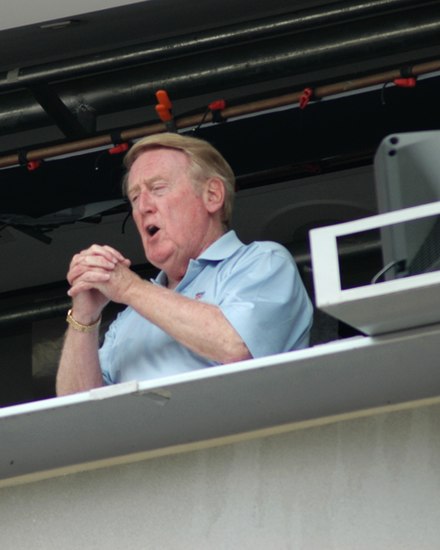
 Crystal Radios and Vin Scully

From about age 10 I was intrigued by technology.   One of the first devices I purchased was a Heathkit Crystal Radio.  It was a very simple device that you put together in about 3 minutes.  It used radio waves to get a signal and required no batteries.  It was underpowered and had no amplifier so it used earphones. I built that in Bakersfield and soon found that clear channels (those stations with a lot of wattage) were the only ones that came in.  I found two stations that were almost always available - one in LA and one in San Francisco.   On summer nights I could listen to the Dodgers and Vin Scully in bed.  That reinforced my interest in baseball.  I started to like the team in the 50s when the Dodgers went to the World Series in '52, '53. They finally won in 1955.   They came back in '56  to lose to the Yankees and then in '59 they did it again. That was the first series with a west coast team.   But I learned the phrase "wait until next year"even though the Dodgers won twice in the decade.

That crystal radio also informed me about the Our Lady of the Angels fire in 1958 in Chicago and the death of Buddy Holly, the Big Bopper and Richie Valens in 1959.  But the Dodger games were most important.

Scully was a fan of baseball but never was a "homer" announcer.  His call was always balanced and it often involved tons of baseball history that seemed to well up at the drop of a hat.  His call of Kirk Gibson's home run in the 1988 World Series is one that I have replayed many times.

Come forward several decades and I was offered the opportunity to meet Scully in his broadcast booth.  I had a friend who was doing some consulting for the O'Malley family and he invited me for a game and a chance to meet the voice I had first heard on the crystal radio.

As I entered the booth, I noticed a three ring binder with lots of notes.  As I watched his work, he would flip through what looked like unorganized pages and then come up with a classic story or quote.   When they got to a commercial break, I got to say hello and I told him about listening to him since the 50s but said I was a bit disappointed.   He asked why and I said I had always admired his skilled weaving of baseball facts and history into his game coverage.   He joked back - "Look I am over 70 years old, I can't remember everything!"  He was truly gracious.

Fast forward about another decade and I was at a dinner held by an underwriter at a national conference of University Chief Financial Officers.   I was sitting next to the CFO of one of the institutions I represented who had his 10 year old son with him.  We started talking about famous people we had met and when it came to be my turn I listed a bunch of politicians and other famous people and then I said and I had met Vin Scully.   The kid looked at me, ignoring the Presidents, Governors and other celebs and asked "You met Vin Scully?"  That really put the American fascination with celebrities in its proper place.   The book has a chapter "Fleeting Encounters with Fleeting Fame" which discusses my chances to meet some very famous people.

TWO DEVELOPMENTS ON "OF COURSE ITS TRUE EXCEPT FOR A COUPLE OF LIES.." - Last week I was approached by a representative of Archway Publishing, which is a division of Simon and Schuster.  They offered to help publish and distribute the book.   We had a couple of discussions but in the end I did not choose to use them.  I also had the chance to speak with the authors of a wonderful book - Mitka's Secret which is an inspiring story of a child who was forced into slavery by the Nazis - who are friends. The child emigrated to the US and became a successful person in spite of not being able to read and write.   (Buy the book it is an inspiring read!).  I learned a lot about promoting a book. 

Finally, my ACE Design Editor is about ready to have a draft of the completed and designed manuscript. There are a lot of unappreciated details in preparing a manuscript and I seem to have added complexity but adding asides and lots of pictures.  She commented that she has enjoyed the stories in the book - and that has slowed her down a bit.   As we say in Mexico - "Better right than fast."   The final steps are for me to review the manuscript and then to send it to my publisher. (Ingram Spark - which is a major printer and distributor of books on many platforms.)   I assume that the book will now be available on Amazon and Apple Books and through a couple of other sources in October.


Saturday, June 4, 2022

 Charles Tiebout's Chickens

When I first started my doctoral work I discovered an economic geographer named Charles Tiebout.  In 1956 he wrote an article called the "Pure Theory of Local Expenditures" which argued for an economic consideration in where people live based on ambience.   If I want good schools for my kids. I will search out an area based on price of housing and how good the schools are.   It was one of those little gems that got me to think about many things differently.   

But this week brought two issues where I rethought about Tiebout's brilliance.   The Internal Revenue Service published data on the migration by AGI (adjusted gross income) of taxpayers among the various states.  It turns out that Tiebout was right.   In the 2017 Tax Act one provision to find revenue and to make the tax system more equitable (so the rich would actually pay more taxes than middle and lower income taxpayers) the State and Local Tax Deduction was limited to $10,000.   That means that a huge subsidy which formerly went from middle and lower income taxpayers in low tax states to very high income taxpayers in high tax states was limited.   It should have been long ago.

SO after the limit was adopted, what happened?  As the chart above clearly shows lots of high income taxpayers migrated from high tax to low tax states.   California alone lost almost $18 billion in AGI.  And as I have discussed before the California revenue system is heavily dependent on having lots of very high income taxpayers.   If those high income taxpayers disappear, there will be less revenue for the state to spend on all the public services a state offers.   

The argument for reinstating the unlimited deduction for state and local taxes is a bit odd.  Some wizards claim that the SLOT prevents "double taxation" (yup they actually make that claim!).   But the distributional effects of the deduction are clear - almost 90% of the value of the deduction (either before it was capped or after) go to very high income taxpayers who live in high tax states.   SLOT is like asking a truck driver in Idaho to help subsidize a venture capitalist in California.

The disappearance of wealthy taxpayers from the California tax roles is explained by Tiebout's hypothesis.  What is a mystery is another disappearance, no less cataclysmic.  We live in the village of Fair Oaks.  It is an odd community - mixes of incomes and backgrounds.   Our honorary mayor attains office by who can raise the most money for some civic activity.   Most importantly, the village is famous for its feral chickens.  Often when I am walking Indiana in the morning, and on a phone call, the chickens will be squawking and one of the people on the call will wonder where I am.   The village has numerous chicken memorabilia on shop walls.   We even have an annual chicken festival (along with the St. Patrick's Dinner in the Community Clubhouse and the Fair Oaks Theater Festival in the summer (where the plays are occasionally interrupted by chicken accompaniment) which helps to define our community.  Those might be called our "Tiebout amenities" and for us that is pretty good.

But about two months ago the chicken population around the square (across from the Stockman's Bar - a classic saloon) our birds began disappearing.  I've asked around and no one seems to know why the chickens  disappeared.  When I walk in the morning some people have argued that they vanished because of a) attacks of coyotes (yes you do occasionally see coyotes and deer, but not in the square); b) the homeless population down by the river, or c) or some rare form of avian influenza.  But no one believes any of that.  The two Guinea Hens, which were interlopers into the brood, still are in the park and seem to be fine.

What has not been discussed to this point is whether their disappearance can be explained by Tiebout.   Were our chickens very high income and did they move to Florida?   Did some other locality offer better amenities than a free place to roam and plenty of chicken feed?

OF COURSE IT's TRUE EXCEPT FOR A COUPLE OF LIES (PROGRESS REPORT)
The book is with one final editor who is called a design editor.  I searched for someone who had good experience in getting the design elements right. Those are things like the cover photo and the internal organization of the book.  A friend, who has published three books, recommended an editor in Arizona and   I spoke to her.  I  also looked at her website and thought it was a good match.   She will produce a final manuscript which will be print ready for both an ebook and a paperback.   There is one unresolved issue - one of my editors suggested that we divide the book into three volumes (each of about 150 pages) - one on family, one on life and one on ideas/beliefs.   In the end my design editor may recommend to put it all in one volume.  That would make marketing simpler and at the same time it could increase the utility of the volume especially for pressing flowers!


Tuesday, April 26, 2022

 The Arrogance of the Chattering Class

In the last few weeks I've been amazed at how the chattering class has reacted to two stories; the takeover of Twitter by Elon Musk and the actions taken in response to a woke corporation's scolding of Florida, especially their governor.  At the same time the CEO of one of the major investment firms proposed that he should decide, in behalf of his investors, how the money we put in trust for him should vote the underlying shares for corporate governance.  All three stories suggest that the hegemony of cultural elites is under pressure.  From my perspective that is a very good thing.

SO let's start with Elon Musk and Twitter.  This morning David Leonhardt had a column about the Twitter transaction and brought up Thomas Piketty (again).  The author of a flawed book on economic inequality is a go to source for issues like Musk's use of his own resources to takeover Twitter.  Obviously if Musk gets control of Twitter, that is a bad thing.  And, although I have some serious reservations about the methodology (Piketty's book Capital in the Twentyfirst Century seemed to me when I read it to have written a series of conclusions before amassing the data) we do have some very rich people in society.  

Leonhardt's colleague at the NYT Andrew Ross Sorkin wrote a supplemental column called "Friends and Foes" which created all sorts of hobgoblins relating to Musk's actions - completely ignoring the manifold bias of the "fact" checkers who have governed social media (and indeed the main stream media) for a very long time.   Sorkin's argument seemed to characterize Twitter and the other social media platforms as almost public utilities.   That could be true, (and one might consider whether that would be a good idea) but it is not.

Sorkin seems to assume that Musk's ownership will result in "More bullying? More lewd commentary and images? More misinformation?"   Well, Mr. Sorkin - the answer is yes.   But the virtue of free speech is that it is inherently messy.   As James Suroweicki pointed out in The Wisdom of Crowds - give crowds the chance and they will sort out the bad stuff.   Arguing that "the science is settled" (to prevent discussion of alternative thinking about scientific questions) or that any one of a number of other issues in dispute have definable limits  is antithetical to the limits of free speech.    Trump did not win the election.  There were some alternative strategies for dealing with the pandemic.  Free speech is better when the limits of moderation are done by the crowd not some self satisfied group of elites.  The crowd has the ability to sort out the crazies.  The WSJ this morning sorted out (in my opinion) what might happen with Musk's acquisition - "If Mr. Musk can strike a more satisfying balance on content moderation, maybe he’s right about Twitter’s hidden value. Current management is correct that most regular social-media users don’t want a daily bath of Russian bots, jihadist propaganda, noxious harassment and so forth. "

Simultaneously we've seen grumpiness and misrepresentation on the stance of Florida on teaching sex education in the early grades.   Disney's woke CEO Robert Chapek claimed that Florida's recently passed legislation which limits the teaching of sex issues before grade 3 was somehow an abridgment of free speech.  The left has also has come up with some marvelous fictions about the actions by the legislature to eliminate a special district created in behalf of the company to help them build Disneyworld. 

OK - so was it a good idea to eliminate the district and has the legislature considered the consequences of eliminating this special privilege for a wealthy California corporation that employs a lot of Floridians and adds a lot to the state's GDP?   Having worked with legislators for more than 4 decades I can affirmatively answer that the answer is NO.   But are the issues appropriate for a legislature to consider?   ABSOLUTELY   Should a legislature consider constraining the public education establishment from determining curriculum without seeking parental input or consent?   The answer is YES.  But the whining of the cognoscenti is just plain silly.   Free speech is messy, so are democratic systems - but the chattering class believes that their point of view should control.   Not in our system.  

Is part of this story the presumed candidacy in 2024 of Governor DeSantis?  Of course there may be political motives attached to the Governor's and the Legislature's actions. But then of course all the criticism on each side of the issue has some political grounding.   The chattering class tries to hide that their political motives are above judgment.  NO MORE!!!

Finally we come to Larry Fink of Blackrock Capital.   In recent years an increasing number of financial professionals have begun to talk about ESG (Sustainable Investing) where somehow the owners of the company (those who hold shares in the company) are somehow equated with the suppliers of capital.  Corporations become servants of some broader social purpose.   For the most part this new range of investment theory has been relegated to funds created for those purposes.  If you invest your funds in their investment vehicles you assume that your returns will be better. (Based on a reasonable set of criteria).  But then comes the CEO of Blackrock (FINK) who has raised the bar a bit - he now claims that he will vote the shares he owns using his personal predilections. This is ESG investing on steroids.  When he made his statement I divested the funds I had from Blackrock as his principles and mine do not coincide.   I don't want to boycott him as some want to do with Florida.  The answer for people like me who disagree with philosophies like Fink's is to not invest with the guy.   On the left, California official boycotts working with a of majority of states because those states have established positions which contradict the orthodoxy of "woke" California.  So much for tolerance.

In recent years a good portion of the cultural elite have tried to impose their values while disregarding alternative points of view.  All three of these stories suggest that attempt at dominance will be under increasing challenge.  From my perspective that is just fine.   We need, as a society, to work on two things.   First, we need to understand that in a diverse society the cultural commons will include diverse points of view.  Second, and as importantly we need to think about how to talk about issues which divide us.   My grandmother used to say "there is a good reason why God gave us two ears and only one mouth."   Not a bad place from which to start.

Thursday, March 17, 2022


Didn't you always hate those Supply/Demand graph
s?

I've just  finished reading a pretty good book on the Fed called The Lords of Easy Money by John Leonard which describes the role of the Fed especially as it relates to that recent invention called Quantitative Easing (for those of you not schooled in this arcane idea the Australian comedy-news team of Clark and Dawe did a very short explanation of the policy which is right on point. - click on it - Clark and Dawe were a brilliant team of satirists whose weekly political spoofs on a variety of topics were cut short when John Clarke died in 2017).

The numbers around QE were astounding.  At one point the total QE injected into the system was larger than the total monetary expansions in 300 years!   All of that seems pretty arcane until you begin to realize that, at least according to the author there were several other consequences of QE.  To understand those, one needs to be reminded of two types of inflation - PRICE inflation and ASSET inflation.  The easiest way to understand price inflation is to go to any gas station in the US, or make a trip to the grocery store.  The cost of all sorts of things have increased rapidly over the last year.   Chair Powell commented that he expects if all the things they talked about yesterday are successful that at the end of the year price inflation will be down to just under 5% or two and a half times the Fed policy rate.  

Asset inflation is harder to detect and often its effects make us want to proclaim how smart we are.  When you buy a house that increases quickly in price - many people simply judge that they were good "students of the market."   Asset inflation can also be a bit harder to assess because one is not always to establish an accurate price for an asset easily. Many assets are intangible.    When I worked in a securities firm for two summers in college there was an obligatory read called Extraordinary Delusions and the Madness of Crowds by Charles MacKay written in 1841 which described a series of market bubbles where assets were absurdly valued because of the "madness of crowds". (Note it was a good yarn although several of his tales were not quite accurate).  Don't blame a 19th Century Scottish poet for not getting the facts right on financial blunders - economists have done their best to build fallible models since then.  When I started investing in securities about a decade later the founder of Fidelity Magellan offered some very sound advice to avoid bubbles - Peter Lynch commented that if you cannot define a financial transaction on a single sheet of paper with a crayon - you probably should avoid it.

Price inflation makes all of us poorer (we pay more for less) but the effects are harder on those who spend most of their resources on things. (The poor really do get whacked when we have 7% inflation!). Asset inflation affects only those who own assets (except for some indirect effects - like possible increases in rent for dwellings which might go up as the perceived price of the asset increases).  And an increasingly smaller percentage of society owns real assets.

While I am not a fan of the nonsensical wails of "social justice" advocates who decry income and wealth inequality and attribute the changes to conspiratorial effects, it is worth considering that as QE grew, the American economy slowed the opportunity for making moves between income quintiles.

Leonard argues that as all that fluffle money was pumped into the system it produced tons of asset inflation causing a couple of stock and housing bubbles - with the inevitable crash. That is because as you add money to the system it reduces the price of money (in essence it keeps rates low) so investors are forced to search for yield.   But here is where his analysis is most interesting.  First, as QE money sloshed the rich got richer, exacerbating the wealth inequality in society.  The most prominent discussions of income  and wealth inequality seem to ignore that major factor.  It is easier to point to some sinister force like the "1%. "  Second, federal policy makers decided that when asset markets crashed that the losers (owners of those inflated assets) should be bailed out.  SO the richest in society were given a chance to make odd economic decisions and still get bailed out.  Sounds like a pretty sweet deal.

The Fed announced on the 16th (the day I finished Leonard's book) that they would begin doing rate hikes in the federal funds rate - the first in about 4 years.  Powell said there would be seven before the end of the year (with the possibility that they might do another four soon after).   That sounds like pretty stiff stuff until you realize as the WSJ pointed out - all of those jumps would still leave negative interest rates (inflation would be higher than the borrowing rate).   He also said there would be an indeterminate reduction in the $9 trillion in QE still floating in the markets.

So with all these increases in rate - how will life change?  If you maintain either a variable rate mortgage (which was a lousy bet during this low rate environment) or any credit card debt - you are going to see rates increase.  Ditto for car loans and student loans.   You might get a slight jump in the rates you receive for money market and savings accounts.  But if you don't have any of those types of debts or plan to add some you might not feel anything.  The real question for everyone is whether all these rate hikes will tame inflation.  For me the Fed's actions are a step in the right direction but I remain to be convinced that price and asset inflation will moderate (assets are more likely to be slowed than prices).   Obviously, if the Fed moves too quickly we could be moved into a recession.

Leonard argues that the Fed stepped into a breach created by our other dysfunctional government institutions.  It is ill equipped to make policies which the Congress and the Administration and the interplay of interests would be better able to deal with.  I will admit that during the Greenspan era I was bothered by the rock star treatment that he was accorded by members of Congress.  When you compare Greenspan to Volker - the latter comes out as much more of a hero.   I think the same can be said of Bernanke and Powell.  (With a nod to Powell and not Bernanke)  But I must admit that I have always been a fan of the approach that Stanford professor John Taylor suggested where monetary levers are set and forgotten - fine tuning seems to be a contradiction in terms.